- Business/Economy
- No Comment
₦200 Billion Then, ₦1.4 Trillion Today: The Development Nigeria Never Saw in Kogi State

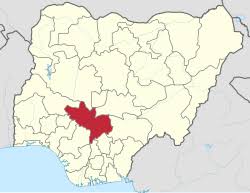
22nd July 2026, NewsOrient, Opinion, Column, Governance And Development, Business And Economy, News. Photo Credit: Wikipedia. By Ahmad Adamu

The ongoing prosecution of former governor of Kogi State, Alhaji Yahaya Bello by the Economic and Financial Crimes Commission (EFCC), over the alleged diversion of approximately ₦200 billion has become one of Nigeria’s most closely watched corruption cases. As with every criminal prosecution, it is important to emphasize that the allegations remain before the courts, and the former governor is presumed innocent unless proven guilty.
Yet beyond the courtroom lies an issue that deserves equal public attention: the staggering economic opportunity that such a sum could represent if deployed for public development.
Many economic commentators estimate that ₦200 billion during the period of Yahaya Bello’s administration would command purchasing power approaching ₦1.4 trillion today, reflecting years of inflation and the depreciation of the naira. Whether one adopts that estimate or another, there is little doubt that the amount represents resources capable of transforming an entire state.
For ordinary citizens, large figures such as billions or trillions of naira often seem abstract. They become meaningful only when translated into schools, hospitals, roads, water systems, jobs, and opportunities.
That is where the true conversation begins.
Imagine every one of Kogi State’s twenty-one local government areas equipped with modern schools, functional hospitals, reliable water schemes, good rural roads, and thriving agricultural hubs. Imagine young graduates finding employment instead of leaving the state in search of opportunities. Imagine communities where expectant mothers no longer travel for hours to access emergency healthcare and where children learn in digitally equipped classrooms.
Such possibilities illustrate the development dividend that prudent management of public resources can deliver.
Education is perhaps the most powerful investment any government can make. A significant portion of resources on this scale could modernize thousands of classrooms, build new science laboratories, establish information and communication technology centres, expand technical colleges, improve teachers’ welfare, and provide scholarships for talented students from disadvantaged backgrounds.
A child educated today becomes tomorrow’s doctor, engineer, teacher, entrepreneur, or public servant. Education reduces poverty, improves productivity, strengthens democratic participation, and promotes social stability. Every school built today continues producing value for decades.
Healthcare presents another compelling example.
Across many parts of Kogi State, primary healthcare centres require renovation, better equipment, uninterrupted electricity, adequate medical personnel, and consistent drug supplies. Investments running into hundreds of billions of naira could establish modern general hospitals in underserved areas, strengthen emergency medical services, improve maternal healthcare, and significantly reduce preventable deaths.
The health of a population directly influences economic productivity. Healthy citizens attend school regularly, work more effectively, and contribute more meaningfully to economic growth.
Access to potable water is equally transformative.
Thousands of communities across Nigeria continue to depend on unsafe water sources. Large-scale investments could finance boreholes, water treatment plants, reticulation systems, solar-powered pumping stations, and sustainable maintenance programmes across Kogi State.
The economic returns would extend far beyond improved health. Women and children would spend less time searching for water, school attendance would improve, disease outbreaks would decline, and household healthcare expenses would fall considerably.
Road infrastructure remains another cornerstone of development.
Well-constructed roads reduce transportation costs, improve market access, encourage investment, lower vehicle maintenance expenses, and connect isolated communities to essential public services.
For farmers, every kilometre of improved rural road means easier movement of produce, reduced post-harvest losses, and higher incomes. For traders, it means faster delivery of goods. For investors, it signals that government is committed to creating an enabling business environment.
Agriculture, Kogi’s natural comparative advantage, could have experienced unprecedented expansion.
The state possesses abundant fertile land suitable for rice, cassava, maize, yam, cashew, cocoa, and other commercial crops. Investment in irrigation, mechanisation, storage facilities, agro-processing industries, and agricultural extension services would not only increase food production but also create thousands of direct and indirect jobs.
Instead of exporting raw produce, Kogi could have developed value chains that retain wealth within the state through processing, packaging, and marketing.
The employment implications are enormous.
Large public investments stimulate economic activity through what economists describe as the multiplier effect. Construction companies hire workers. Suppliers sell building materials. Engineers, architects, surveyors, artisans, transport operators, traders, and service providers all benefit from increased economic activity.
Every salary earned circulates through local markets, generating additional income and supporting small businesses.
This cycle of investment, employment, spending, and reinvestment forms the foundation of sustainable economic growth.
The implications extend further.
Improved infrastructure attracts private investors who require reliable roads, quality schools, functional healthcare facilities, stable water supply, and efficient public institutions. When governments invest wisely, private businesses often follow, creating additional employment opportunities and expanding the tax base.
This virtuous cycle strengthens public finances while reducing dependence on federal allocations.
Conversely, the absence of such investments carries its own heavy costs.
Poor educational facilities produce graduates ill-prepared for the modern economy. Weak healthcare systems increase mortality and reduce labour productivity. Inadequate water infrastructure perpetuates disease. Poor roads discourage investment and isolate rural communities. Youth unemployment fuels frustration, migration, and insecurity.
These costs are rarely captured in financial statements, yet they shape the daily realities of millions of citizens.
The broader lesson is not confined to one administration or one state.
Across Nigeria, allegations of corruption should be viewed not merely as legal controversies but as developmental setbacks. Every naira legitimately allocated to public service carries the potential to improve lives. When such resources fail to reach their intended purposes, society loses opportunities that may never be recovered.
Equally, accountability must remain anchored in the rule of law. Allegations should be established through credible evidence before competent courts, while the constitutional rights of every accused person are fully respected. Justice is best served when legal institutions operate independently, transparently, and without political interference.
Ultimately, citizens should judge governments not only by political rhetoric but by measurable improvements in living standards.
A truly prosperous state is not defined by the wealth of its political elite but by the quality of its schools, hospitals, roads, water systems, farms, industries, and employment opportunities.
If resources equivalent to today’s estimated ₦1.4 trillion had been fully and efficiently invested in public welfare, Kogi State’s development trajectory might have looked remarkably different. That possibility is what makes corruption—wherever it is proven—not merely a crime against the treasury but a theft of opportunity from present and future generations.
As the courts continue to determine the facts of the case, Nigerians should keep their attention on the larger question: how can public resources be protected so that they consistently translate into better lives for the people they are meant to serve?
That question will remain relevant long after this trial has ended
*INFOGRAPHIC*
A companion infographic is also provided as it translates a very large sum into concrete development possibilities. Given that the precise purchasing power of the money depends on assumptions about inflation, project costs, and procurement, the figures below are illustrative scenarios rather than assertions of what would definitely have been built.
*₦1.4 Trillion Today: What It Could Potentially Deliver for Kogi State*
(Illustrative estimates based on typical public infrastructure costs. Actual costs vary by location, project design, procurement, and inflation.)
*EDUCATION*
A Revolution in Learning
With approximately ₦1.4 trillion, Kogi State could potentially have:
– Built or comprehensively renovated over 2,000 modern classroom blocks.
– Constructed hundreds of Smart Schools equipped with ICT laboratories.
– Built and equipped science laboratories across secondary schools.
– Established technical and vocational training centres in every senatorial district.
– Awarded thousands of university scholarships to indigent students.
– Recruited and trained thousands of additional teachers.
Impact:
– Higher school enrolment.
– Reduced classroom congestion.
– Better examination outcomes.
– Increased digital literacy.
– More employable graduates.
*HEALTHCARE*
Saving Lives Through Better Health Services
Potential investments include:
– Modern General Hospitals across the state.
– Fully equipped Primary Healthcare Centres in every Local Government Area.
– Ambulance services for emergency response.
– Maternal and child healthcare facilities.
– Diagnostic laboratories and medical equipment.
– Recruitment of doctors, nurses, pharmacists and laboratory scientists.
Impact:
– Reduced maternal mortality.
– Lower infant mortality.
– Improved life expectancy.
– Better emergency medical care.
– Reduced medical tourism outside the state.
*WATER SUPPLY*
Clean Water for Every Community
Possible investments:
– Thousands of solar-powered boreholes.
– Urban water treatment plants.
– Rural mini-water schemes.
– Community reticulation networks.
– Maintenance programmes for existing facilities.
Impact:
– Reduced cholera and typhoid.
– Improved sanitation.
– Better public health.
– Increased productivity.
– Time saved for women and children.
*ROADS & TRANSPORT*
Potential projects include:
– Hundreds of kilometres of quality urban roads.
– Extensive rural road rehabilitation.
– Modern drainage systems.
– Bridges linking isolated communities.
Impact:
– Easier movement of goods.
– Lower transportation costs.
– Increased agricultural productivity.
– Attraction of private investment.
*AGRICULTURE*
Potential investments:
– Irrigation projects.
– Tractor hiring centres.
– Fertiliser support programmes.
– Modern storage facilities.
– Agro-processing industries.
Impact:
– Food security.
– Reduced post-harvest losses.
– Increased farmers’ incomes.
– Thousands of rural jobs.
*YOUTH EMPLOYMENT*
Resources on this scale could stimulate:
– Massive construction employment.
– ICT innovation hubs.
– Entrepreneurship grants.
– Skills acquisition programmes.
– Small business financing.
Impact:
– Reduced unemployment.
– Lower crime.
– Stronger local economy.
– Increased household incomes.
*THE BIGGER PICTURE*
If public resources are efficiently managed:
✔ Better schools
✔ Better hospitals
✔ Clean drinking water
✔ Modern roads
✔ More jobs
✔ Stronger agriculture
✔ Increased private investment
✔ Higher living standards
*A FINAL WORD*
The allegations against former Governor Yahaya Bello remain before the courts, and under the law he is presumed innocent unless proven guilty. Nevertheless, the public debate surrounding the case serves as a reminder that every naira of public revenue carries the potential to improve the lives of citizens. Whether in Kogi State or elsewhere in Nigeria, the true measure of governance is not the size of public budgets but how effectively those resources are translated into education, healthcare, infrastructure, economic opportunity, and human dignity.This infographic can accompany the feature article on a newspaper’s center spread or editorial page, presenting the analysis in a concise, visually engaging format while maintaining legal fairness regarding the ongoing court proceedings.
~ Published By NewsOrient Network
For News, Inter
views, Special Events Coverage, Advertisements, Corporate Reports, etc., Contact:
Email: Newsorientng@gmail.com
Website: https://newsorientng.com
Phone: +2348023165410; +2348064041541